

Low-Bed Semi-Trailers for Heavy Equipment Transportation
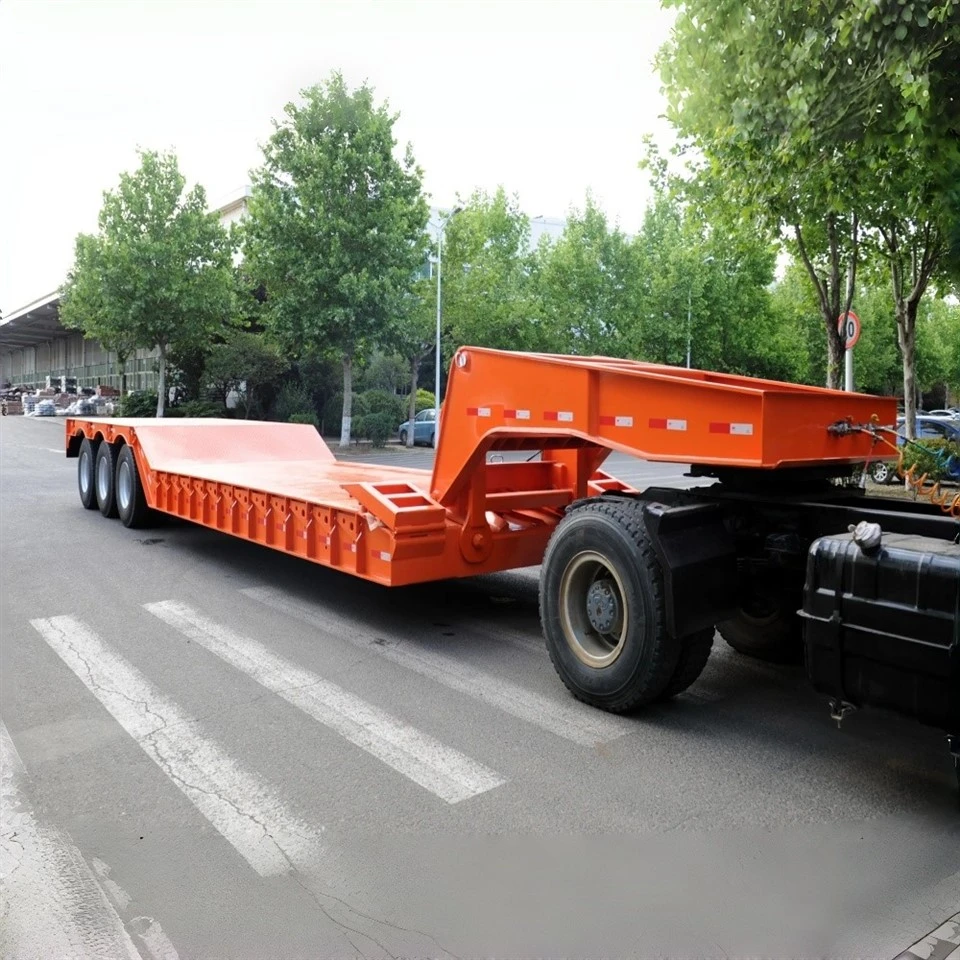
Low-bed semi-trailers are heavy-haul trailers engineered with a dropped cargo deck sitting significantly lower than standard flatbeds. This low profile helps clear overhead obstacles—such as bridges, tunnels, and utility lines—while lowering the center of gravity.
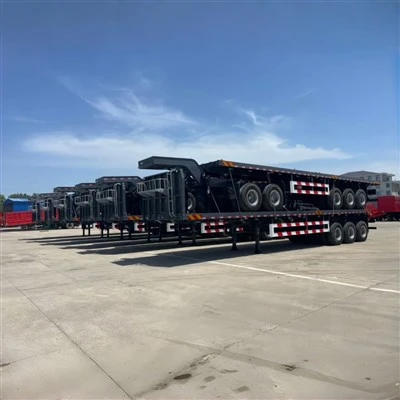
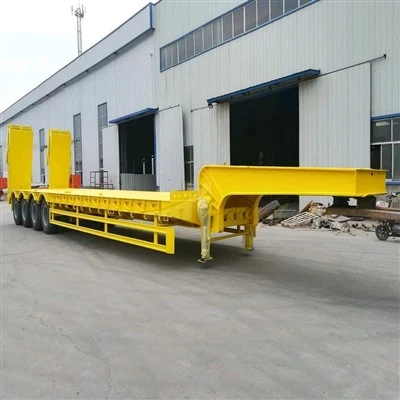
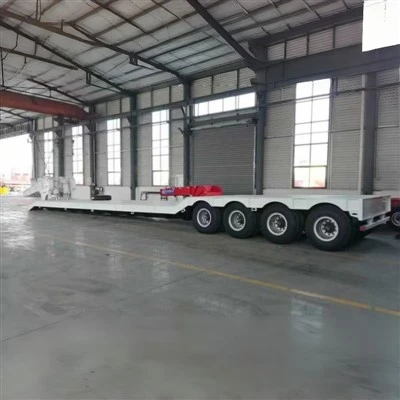
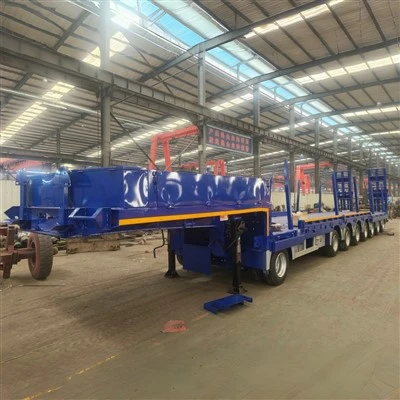

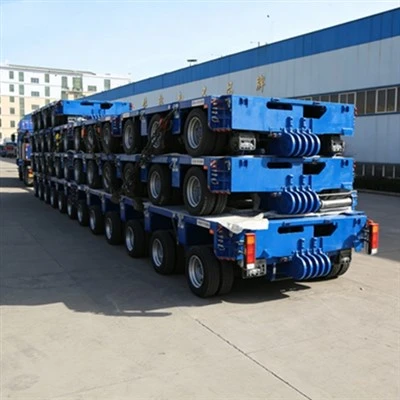
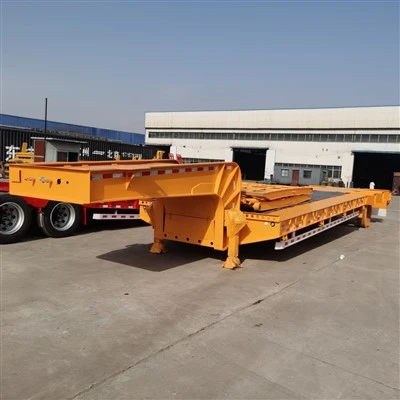
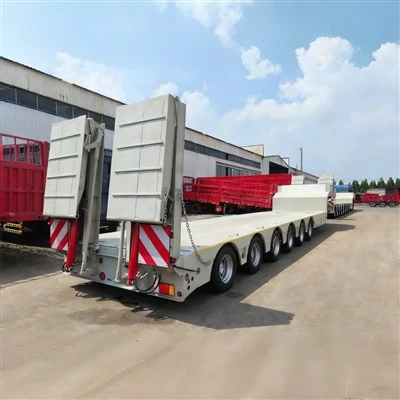
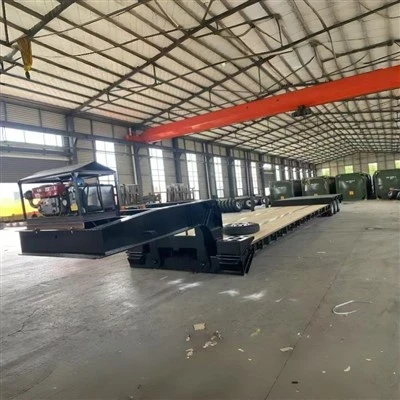
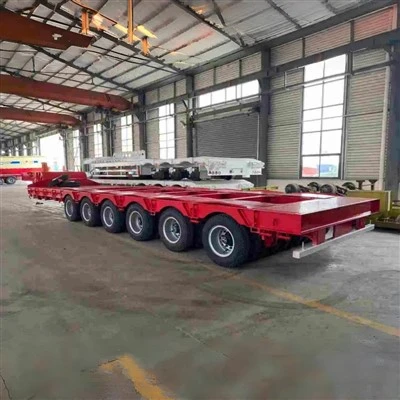
30–60 Ton Typical Payload Range (2–3 Axles): Configured with 2 or 3 axles (rated at 13T or 16T per axle assembly). Legal payload depends on axle-group distribution, kingpin load, tire ratings, and local laws.
60–100 Ton Typical Payload Range (3–4 Axles): Uses 3 or 4 heavy-duty axle assemblies (single or dual tires) to distribute higher loads across the road surface.
100–150+ Ton Heavy-Haul Range (5–8+ Axle Bogies): Combines multi-axle rear groups or hydraulic axle lines to manage extreme concentrated loads on permitted corridors and mining sites.
Axle Spacing & Kingpin Matching: Axle spacing (typically 1,310–1,500 mm) and bolt-in kingpins (2" or 3.5") are calculated to match regional bridge formulas and your tractor’s fifth-wheel vertical load rating.
Suspension & Steering Selection: Available with heavy-duty leaf-spring suspension, air ride (for shock-sensitive cargo with proper securement), and self-steering or hydraulic forced-steering rear axles.
I-Beam Main Girder Geometry: Longitudinal main girders feature web heights of 450–550 mm, sized to match target payload, deck span, and steel grade.
Structural Steel Selection: High-stress zones and main beams use high-strength low-alloy steel—such as Q345B (per applicable GB/T standards) or higher-yield Q460C / T700—with mill test certificates available upon request.
Cross Members & Load Engineering: Channel-steel cross members (350–500 mm center-to-center spacing) and reinforced side rails resist concentrated track pressure, dynamic road forces, and varying cargo centers of gravity.
Submerged-Arc Welding & Inspection: Main girders use continuous submerged-arc welding, with visual checks and ultrasonic testing (UT) on critical joints per internal QC standards or buyer specifications.
Surface Preparation & Coating: Frames undergo automated shot blasting to Sa2.5 cleanliness standards, followed by anti-corrosion primer and a multi-component polyurethane topcoat.
Loading Systems & Transport Equipment
Mechanical Spring-Assisted Ramps
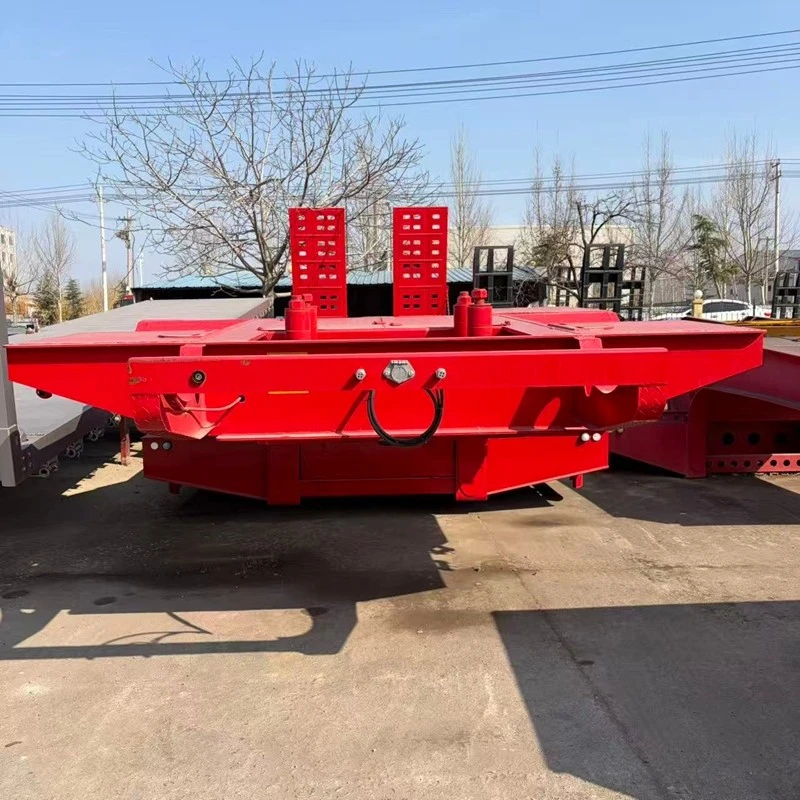
Heavy-duty torsion springs assist manual ramp operation without external hydraulics, following standard safety procedures.
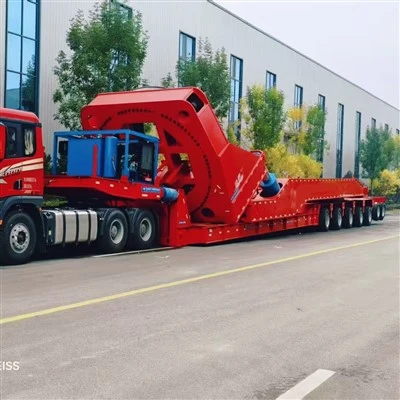
Front-End Detachable Neck Loading
Lowering the RGN front deck to ground level creates a low-incline ramp so tracked machines drive straight on without climbing rear tires.
Hydraulic Folding & Dual-Stage Ramps
Powered by an electro-hydraulic unit or tractor PTO, dual-folding ramps achieve a shallow 12°–15° climb angle (depending on ramp length and deck height) for low-clearance machinery.
Landing Gear & Rear Stabilizers
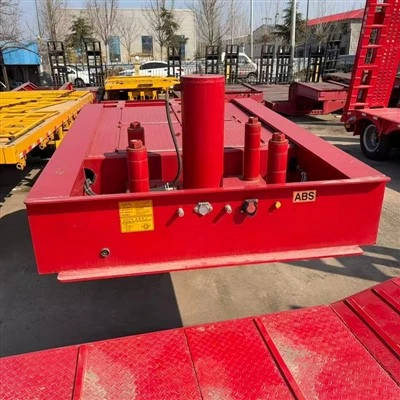
Equipped with heavy-duty front landing gear (rated up to 28T static / 80T lifting capacity per manufacturer specs) plus rear hydraulic or mechanical stabilizers.
Custom Design
Trailer-to-Tractor Compatibility
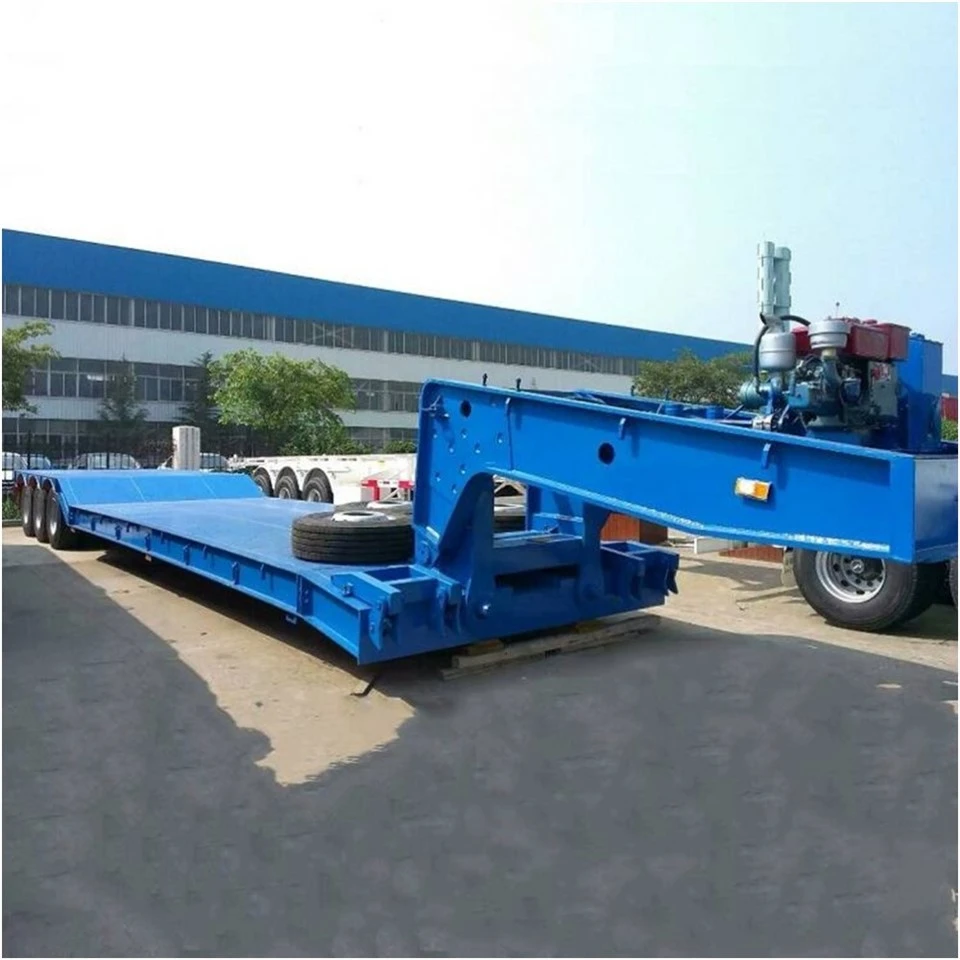
Engineers verify fifth-wheel height, kingpin vertical load, tractor axle capacities, air/electrical connectors (ISO 7/15-pin plugs, palm couplings), and Gross Combination Weight (GCW) against destination laws.
Component & Brand Selection
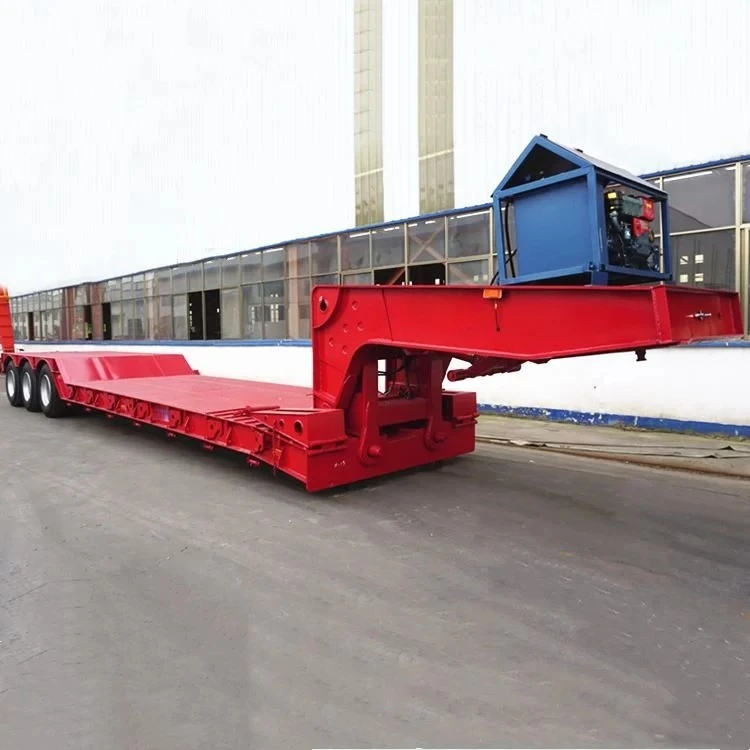
Choose axle assemblies (FUWA, BPW, SAF), braking systems (WABCO dual-line air brakes with optional ABS/EBS), tires, and hydraulic power packs to match local parts availability.
CAD Sign-Off
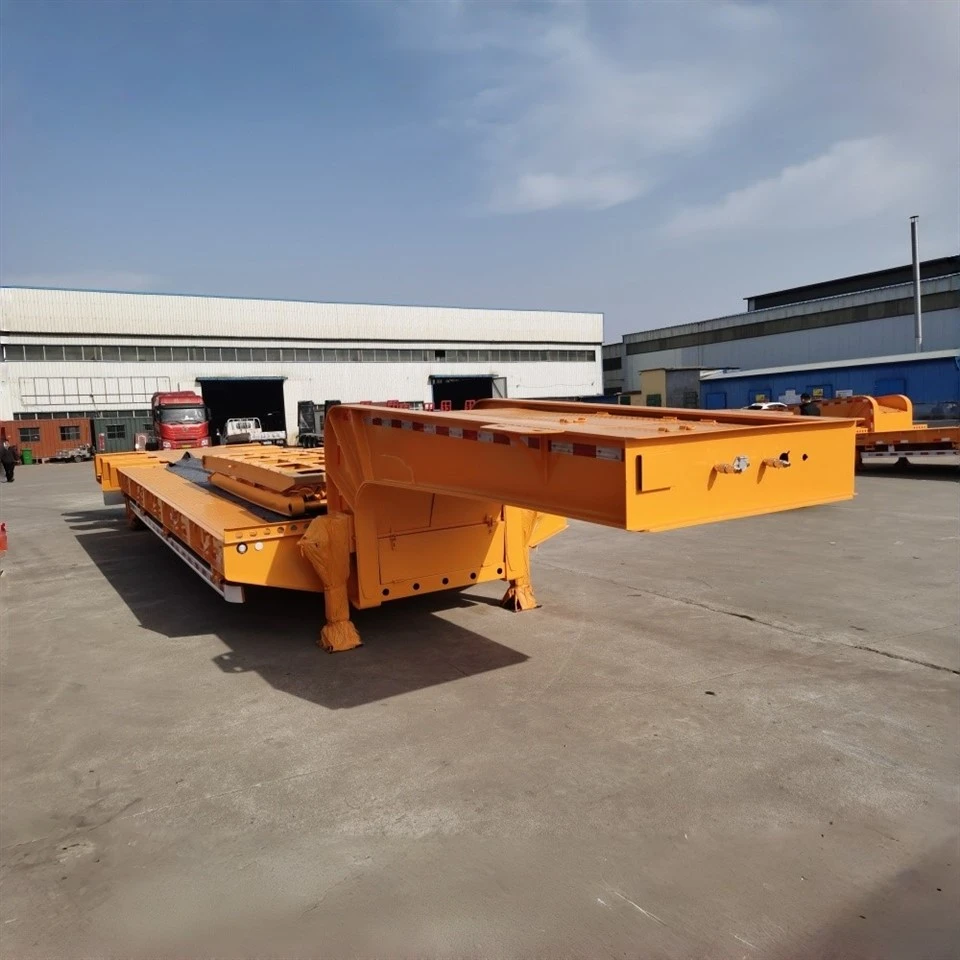
We provide GA drawings with axle load and swing clearance calculations for approval before cutting steel.
FAQ
As one of the most professional low-bed semi trailer manufacturers and suppliers in China, our products have good reputation in the market. Please feel free to buy premium low-bed semi trailer made in China here from our factory. Quality products and reasonable price are available.
