Low-bed Semi Trailer Buying Guide: Key Factors Every Heavy Transport Buyer Should Know
Introduction
A low-bed semi trailer is an essential transportation solution for moving heavy machinery, construction equipment, mining vehicles, industrial components, and other oversized cargo. Unlike standard flatbed semi trailers, its lowered cargo platform provides additional vertical clearance, making it suitable for transporting tall equipment while helping keep the overall vehicle height within applicable road limits.
For construction contractors, mining companies, heavy equipment dealers, logistics providers, and international transport operators, selecting the right low-bed semi trailer is an important investment decision. The trailer must not only carry the required payload but also match the dimensions of the transported equipment, loading and unloading methods, road conditions, towing vehicle, and local transportation regulations.
A low-bed semi trailer that is incorrectly configured can create practical problems during operation. Insufficient platform width may make equipment difficult to position, an unsuitable axle configuration may result in uneven load distribution, and excessive platform height may cause clearance issues on routes with bridges or overhead structures. These factors can increase transportation risks, operating costs, and project delays.
This buying guide explains the major factors heavy transport buyers should evaluate before purchasing a low-bed semi trailer. From trailer types and technical specifications to manufacturing quality, transportation requirements, and supplier selection, understanding these considerations can help buyers choose equipment that delivers reliable performance throughout its service life.
1. Understand Different Types of Low-bed Semi Trailers and Their Applications
Low-bed semi trailers are available in different structural designs and configurations. Each type is developed for particular cargo dimensions, loading requirements, and transportation conditions. Before comparing prices or technical specifications, buyers should identify which trailer structure best matches their intended applications.
Conventional Low-bed Semi Trailers for General Heavy Equipment Transportation
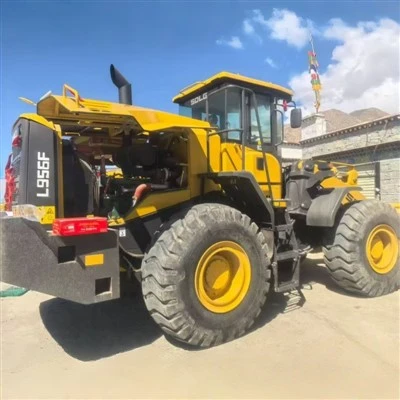
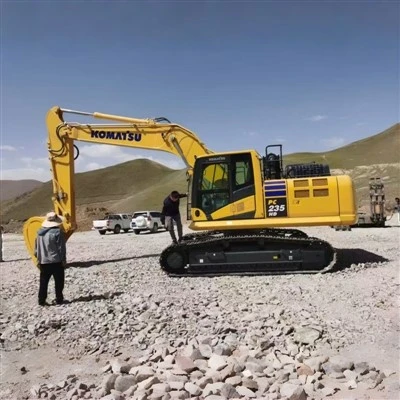
Conventional low-bed semi trailers are widely used for transporting excavators, bulldozers, loaders, road construction machinery, agricultural equipment, and other heavy cargo.
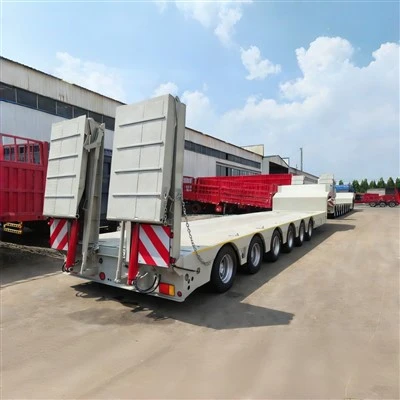
Their main characteristic is a lowered cargo platform positioned between the front gooseneck section and the rear axle assembly. This design provides a lower loading surface than many standard flatbed trailers, helping accommodate tall equipment and improve transportation stability.
Conventional low-bed semi trailers are often suitable for buyers who regularly transport equipment with relatively consistent dimensions and weight requirements. Their straightforward structure can also make daily operation and maintenance more manageable.
When evaluating this type, buyers should pay attention to the following factors:
- Whether the platform length and width can accommodate the largest equipment in the fleet.
- Whether the platform height provides sufficient ground clearance during transportation.
- Whether the trailer has suitable ramps or other loading equipment for the machinery being transported.
- Whether the frame and axle configuration can handle the intended load distribution.
For general construction and machinery transportation, a conventional low-bed semi trailer may provide a practical balance between loading capacity, structural simplicity, and operating convenience.
Detachable Gooseneck Low-bed Semi Trailers for Large Machinery
A detachable gooseneck low-bed semi trailer is designed to simplify the loading of certain types of heavy equipment. Its front gooseneck section can be disconnected from the main trailer body, allowing the front of the cargo platform to lower closer to the ground.
This configuration can create a front-loading path for self-propelled machinery such as excavators, drilling rigs, bulldozers, and other tracked equipment. Instead of relying entirely on rear loading ramps, operators can drive compatible machinery onto the lowered platform from the front.
However, buyers should understand that detachable gooseneck designs are not identical across manufacturers. Some configurations use mechanical connection systems, while others incorporate hydraulic mechanisms to assist with detachment and reconnection.
When purchasing this type of low-bed semi trailer, check the following details:
- The gooseneck connection and locking structure.
- The detachment and reconnection procedure.
- The compatibility between the loading angle and the equipment's approach geometry.
- The hydraulic components, if the trailer uses a hydraulic detachment system.
- The manufacturer's operating and maintenance instructions.
A detachable gooseneck design can improve loading convenience for specific machinery, but its suitability depends on the equipment dimensions, loading environment, and actual operating procedures.
Extendable Low-bed Semi Trailers for Oversized Cargo
Some heavy equipment and industrial components are too long for conventional low-bed semi trailers. Examples include long structural components, industrial machinery assemblies, wind energy components, and specialized construction equipment.
Extendable low-bed semi trailers address this requirement through an adjustable platform length. The cargo deck can be extended to accommodate longer loads, depending on the trailer's structural design and permitted extension range.
This flexibility is particularly useful for transport companies handling different cargo dimensions across multiple projects. Instead of purchasing a separate trailer for every cargo length, operators may use an extendable configuration for several transportation tasks.
However, extension changes the trailer's structural and operational conditions. Buyers should evaluate:
- The available extension range and locking mechanism.
- The structural strength of the sliding or telescopic sections.
- The load capacity under different extension positions.
- The stability of the platform when carrying long or unevenly distributed cargo.
- The additional overall length of the vehicle combination during transportation.
An extendable low-bed semi trailer should be selected according to the actual dimensions and weight distribution of the cargo, rather than platform length alone.
Multi-Axle Low-bed Semi Trailers for Heavy-Duty Transportation
For extremely heavy machinery or industrial cargo, a multi-axle low-bed semi trailer may be required. Additional axle lines help distribute the transported load across more wheel positions, which can reduce the load carried by individual axles when the trailer is properly designed and loaded.
These trailers are commonly considered for mining equipment, large construction machinery, power generation components, industrial plant equipment, and other heavy-duty transportation projects.
The number of axles should be determined according to the cargo weight, trailer dead weight, axle-load requirements, road regulations, and towing vehicle capacity.
Buyers should not assume that adding more axles automatically makes a trailer suitable for any heavier load. The complete vehicle combination must still meet applicable legal and technical requirements.
Important considerations include axle spacing, suspension capacity, tire specifications, braking performance, and load distribution. For particularly demanding applications, buyers may also need to evaluate specialized hydraulic suspension or steering configurations.
2. Evaluate Key Technical Specifications Before Purchasing
Technical specifications directly influence the transportation capacity, operational safety, and compatibility of a low-bed semi trailer. Buyers should examine the complete configuration instead of focusing on a single advertised payload figure.
Payload Capacity and Load Distribution
Payload capacity is one of the first specifications buyers should check. It indicates how much cargo the trailer is designed to carry under its specified operating conditions.
However, selecting a low-bed semi trailer based only on the total cargo weight can lead to an unsuitable configuration. The weight of heavy machinery is not always evenly distributed. An excavator, for example, may concentrate a significant proportion of its weight around its tracks, while certain industrial components may have a heavy center section or uneven support points.
The trailer must therefore be capable of handling both the total payload and the actual load distribution.
Before requesting a quotation, buyers should prepare information about:
- The maximum cargo weight.
- The equipment's overall length, width, and height.
- The location of its center of gravity, if available.
- The contact points between the equipment and the cargo platform.
- The expected position of the cargo during transportation.
A suitable trailer configuration should provide sufficient structural support without exceeding the rated capacity of its axles, suspension, tires, or other components.
For fleet operators transporting different types of machinery, it is also worth considering the heaviest and most demanding regular cargo rather than selecting a trailer based on average transportation requirements.
Platform Height, Width, and Length
The dimensions of the cargo platform determine which equipment can be transported and how easily it can be loaded.
Platform height is particularly important because the primary advantage of a low-bed semi trailer is its reduced loading deck. A lower platform can provide additional vertical clearance for tall machinery, helping reduce the risk of exceeding permitted vehicle height limits.
Nevertheless, platform height must be considered together with ground clearance. A trailer with an extremely low deck may encounter difficulties when traveling over uneven roads, steep entrances, ramps, or other obstacles.
Platform width and length should also match the equipment being transported. A platform that is too narrow may leave insufficient space for safe positioning and securing, while an unnecessarily long trailer can increase maneuvering difficulty and overall vehicle length.
Buyers should evaluate:
- The cargo platform's usable length rather than only the trailer's overall length.
- The available platform width and any permitted side extensions.
- The loading deck height under the specified operating conditions.
- The clearance around the cargo after loading.
- The dimensions of the complete vehicle combination when connected to the towing truck.
If the trailer will transport several equipment models, buyers should compare their dimensions and identify the largest configuration that must be accommodated.
Axle Configuration and Suspension Systems
Axle configuration affects load distribution, road contact, maneuverability, and the trailer's ability to operate under different transportation conditions.
Two-, three-, four-, and multi-axle configurations may be available depending on the trailer's design and intended payload. The appropriate choice depends on the cargo weight, axle-load restrictions, road conditions, and local regulations.
Suspension selection is equally important. Common options include mechanical suspension, air suspension, and hydraulic suspension, although not every configuration is suitable for every low-bed semi trailer.
Mechanical suspension is often selected for its relatively straightforward structure and maintenance requirements. Air suspension can provide adjustable ride characteristics and may be useful where road comfort and load management are important. Hydraulic suspension is commonly considered for specialized heavy-haulage applications requiring greater flexibility in axle-load distribution or platform movement.
When comparing suspension systems, buyers should consider:
- Rated load capacity.
- Compatibility with the axle configuration.
- Availability of replacement components.
- Maintenance requirements.
- Performance on the expected road surfaces.
- Whether the system requires additional hydraulic or electronic controls.
The best suspension system is not necessarily the most complicated one. It should match the actual transportation environment and the maintenance capabilities of the operating fleet.
Frame Structure and Material Strength
The frame is the main load-bearing structure of a low-bed semi trailer. Its design affects bending resistance, torsional strength, fatigue performance, and long-term reliability.
Heavy equipment transportation exposes the trailer to repeated loading forces, road impacts, braking forces, and dynamic stresses. A poorly designed frame may experience excessive deformation or premature fatigue, especially when the trailer regularly carries heavy or unevenly distributed cargo.
Buyers should examine the structural design of the main beams, crossmembers, gooseneck, axle support areas, and connection points.
The following aspects deserve particular attention:
- Main beam dimensions and structural design.
- Steel grade and material traceability.
- Welding processes and inspection procedures.
- Reinforcement around high-stress areas.
- Quality of the connection between the frame and suspension components.
- Corrosion protection on exposed steel surfaces.
A manufacturer should be able to explain the structural design and provide relevant technical information. Buyers handling high-value machinery should also request available inspection records or quality documentation.
Braking Systems and Safety Components
A fully loaded low-bed semi trailer requires a braking system that can operate reliably under the expected transportation conditions.
The braking configuration should be compatible with the towing vehicle and comply with the requirements of the destination market. Buyers should verify the brake type, control system, emergency braking arrangements, and compatibility with the tractor unit.
Other safety components are also important. These may include lighting systems, reflective markings, anti-lock braking equipment where required, parking brakes, and appropriate electrical connections.
Cargo securing equipment deserves special attention. Low-bed semi trailers should provide suitable tie-down points, lashing rings, or other approved securing arrangements for the cargo being transported.
Before purchasing, buyers should confirm:
- Whether the braking system meets the applicable market requirements.
- Whether the trailer's braking components are compatible with the tractor.
- Whether the number and position of tie-down points suit the intended machinery.
- Whether ramps, support structures, and locking devices have adequate rated capacities.
- Whether the trailer includes the required lighting and warning equipment.
A technically suitable trailer must support not only the weight of the cargo but also its safe positioning, restraint, and transportation.
3. Match Low-bed Semi Trailer Configuration with Transportation Requirements
A low-bed semi trailer should be selected according to the complete transportation task. The same trailer may perform well in one working environment but be inefficient or unsuitable for another.
Before confirming a configuration, buyers should evaluate the cargo, loading process, transportation route, and regional regulations together.
Identify the Type and Dimensions of Transported Equipment
The first step is to identify exactly what the trailer will carry. Different types of equipment have different transportation characteristics, even when their total weights are similar.
For example, an excavator may require sufficient platform width for its tracks and appropriate support points beneath its structure. A bulldozer may need additional attention to blade dimensions and overall transport width. A drilling rig or industrial machine may have a high center of gravity or unusual weight distribution.
Buyers should prepare a cargo information sheet containing:
- Equipment type and model.
- Operating weight and transportation weight.
- Overall length, width, and height.
- Track width or wheelbase, where relevant.
- Center of gravity and support points, if known.
- Any detachable components that can be removed before transportation.
This information allows the manufacturer to recommend a suitable platform, axle configuration, and loading arrangement.
For international buyers, it is particularly important to provide accurate cargo dimensions before production. Incorrect measurements can result in a trailer that technically meets its advertised payload capacity but cannot accommodate the actual equipment.
Consider Loading and Unloading Methods
Loading and unloading arrangements have a direct impact on trailer selection and daily operating efficiency.
Some low-bed semi trailers use rear ramps to allow machinery to drive onto the platform. Others may use detachable gooseneck structures for front loading. The appropriate method depends on the equipment's mobility, ground clearance, approach angle, and available loading space.
For example, tracked excavators and bulldozers may be suitable for certain ramp-loading arrangements, while equipment with low ground clearance may require a different loading solution.
Buyers should consider the following questions:
- Can the equipment drive onto the trailer independently?
- Is rear loading possible within the available site space?
- Is a detachable gooseneck more practical for the cargo?
- Are the ramps suitable for the machine's weight and track dimensions?
- Is additional loading equipment required?
- Can the loading process be completed safely on the available ground surface?
Ramp length and loading angle should not be overlooked. A short or steep ramp may create difficulties for machinery with limited approach angles, while an unsuitable ramp capacity can introduce additional safety risks.
If the trailer will be used at construction sites with limited space, buyers should also consider the area required for positioning the tractor, trailer, and loading equipment.
Evaluate Transportation Routes and Road Conditions
The transportation route can influence the required trailer dimensions, suspension configuration, axle arrangement, and overall vehicle design.
A low-bed semi trailer used mainly on highways may have different requirements from one regularly operating on rural roads, construction access roads, or mining routes.
Buyers should evaluate the route from the loading location to the final delivery point, including:
- Road width and turning radius.
- Bridge height and overhead clearance.
- Bridge weight limits and axle-load restrictions.
- Road gradients and steep access sections.
- Surface conditions and uneven terrain.
- Tunnel dimensions and overhead obstacles.
- Port, warehouse, and construction-site access.
For long-distance transportation, stability and braking performance are particularly important. For operations involving uneven roads or frequent site access, suspension performance and ground clearance may require additional attention.
Route planning should take place before the trailer configuration is finalized. This helps prevent a situation where the trailer can carry the equipment but cannot complete the intended journey without major route modifications.
Consider Regional Transportation Regulations
Heavy equipment transportation is subject to different regulations in different countries and regions. Requirements may cover gross combination weight, axle loads, vehicle dimensions, lighting, braking equipment, cargo securing, and special permits for oversized or overweight loads.
A low-bed semi trailer's rated payload does not automatically represent the legally permitted payload on every road network.
For example, a multi-axle configuration may help distribute weight, but the permitted axle loads and vehicle combination weight still depend on local regulations. Similarly, an extendable platform may accommodate longer cargo, but the resulting vehicle length may require additional authorization.
International buyers should confirm the applicable requirements before placing an order.
Important regulatory considerations include:
- Maximum permitted vehicle height, width, and length.
- Maximum gross vehicle and combination weight.
- Individual axle-load limits and axle spacing requirements.
- Requirements for special transportation permits.
- Mandatory braking, lighting, and reflective equipment.
- Rules for escort vehicles and route restrictions, where applicable.
If the trailer will operate in several countries, buyers should discuss the intended markets with the manufacturer and relevant transportation authorities. A configuration designed for one country may require adjustments before it can be registered or operated in another.
4. Assess Manufacturing Quality, Maintenance, and Long-Term Operating Costs
The purchase price is only one part of the investment. A low-bed semi trailer may remain in service for many years, so manufacturing quality, maintenance requirements, component availability, and operating reliability should all be considered.
A lower initial quotation does not necessarily mean lower total ownership costs if the trailer requires frequent repairs, has limited parts availability, or cannot meet the demands of daily heavy transportation.
Inspect Manufacturing Processes and Welding Quality
The manufacturing process has a direct influence on the trailer's structural consistency and service life.
The main frame, crossmembers, gooseneck, and suspension mounting areas must withstand repeated loading and road forces. Welding quality is especially important around joints and other areas exposed to high stress.
Buyers should ask manufacturers about their production processes, including material preparation, cutting, forming, welding, assembly, and final inspection.
Useful manufacturing information may include:
- Steel material specifications and incoming material checks.
- Welding procedures and operator qualifications, where applicable.
- Dimensional inspection during frame assembly.
- Inspection of critical welds using appropriate methods.
- Verification of axle and suspension installation.
- Final checks before delivery.
Not every manufacturer uses the same inspection methods, so buyers should request details about the actual procedures applied to the selected trailer model.
Where possible, reviewing factory photographs, production videos, inspection records, and previous delivery cases can provide a clearer understanding of the manufacturer's capabilities.
Evaluate Tires, Axles, and Suspension Durability
Tires, axles, and suspension components are exposed to continuous mechanical stress during heavy-duty transportation. Their quality and suitability can significantly affect operating reliability.
When evaluating a low-bed semi trailer, buyers should check the specifications and origins of key components. They should also confirm whether replacement parts are readily available in the intended operating market.
Tire selection should match the trailer's rated load, axle arrangement, road conditions, and operating speed. Axles should have sufficient rated capacity for the intended configuration, while suspension components must be compatible with the expected operating conditions.
It is also useful to ask whether the manufacturer can provide alternative component brands or specifications. Some international buyers may prefer components that already have established service networks in their local markets.
Before purchasing, clarify:
- Axle brand, model, and rated capacity.
- Tire size, load rating, and quantity.
- Suspension type and rated capacity.
- Brake component specifications.
- Availability of replacement parts.
- Recommended inspection and maintenance intervals.
A consistent supply of compatible components can reduce downtime and simplify maintenance planning throughout the trailer's service life.
Consider Corrosion Protection and Surface Treatment
Low-bed semi trailers may operate in demanding environments, including construction sites, mining areas, coastal regions, and locations with frequent rainfall or high humidity.
Exposure to moisture, mud, dust, chemicals, and road contaminants can gradually damage unprotected steel surfaces. Corrosion can also affect areas that are difficult to inspect, such as joints, internal structural sections, and connections between components.
Buyers should therefore examine the manufacturer's surface preparation and coating processes.
Common protective treatments may include shot blasting, primer application, and multi-layer paint systems. The specific process and coating requirements should be selected according to the expected operating environment.
For trailers operating in coastal or highly corrosive environments, buyers may need to discuss additional corrosion protection measures.
When comparing suppliers, ask about:
- Surface preparation before painting.
- Primer and topcoat specifications.
- Coating thickness requirements.
- Treatment of weld seams and hard-to-reach areas.
- Drying and curing procedures.
- Inspection of the finished coating.
A suitable coating system helps protect the trailer's frame and improve its long-term appearance, although regular cleaning and maintenance remain necessary.
Calculate the Total Cost of Ownership
The total cost of owning a low-bed semi trailer includes more than the purchase price. Buyers should evaluate the expenses associated with transportation, maintenance, tires, replacement components, regulatory compliance, and downtime.
A trailer with a lower purchase price may become more expensive over time if it requires frequent component replacement or is poorly matched to the intended cargo.
A practical cost evaluation should include:
Initial purchase and delivery costs: These may include the trailer price, optional equipment, customization, export packaging, inland transportation, and international shipping.
Operating and maintenance costs: Consider tire replacement, brake servicing, suspension maintenance, lubrication, inspection, and repairs.
Regulatory and transportation expenses: Depending on the operating market, buyers may need to budget for vehicle registration, permits, inspections, and special transport arrangements.
Downtime and productivity losses: Delays caused by maintenance or component shortages can affect project schedules and transportation revenue.
Service life and resale value: A trailer with suitable structural design, reliable components, and proper maintenance may offer better long-term value.
For fleet operators, comparing these factors across several trailer configurations can help identify the most economical solution for their actual transportation volume.
Check Spare Parts Availability and After-Sales Support
Maintenance support is particularly important for buyers operating low-bed semi trailers far from the manufacturer's factory.
If a key component fails during a transportation project, delayed replacement parts or a lack of technical assistance can result in substantial downtime.
Before placing an order, buyers should clarify the manufacturer's after-sales arrangements. These may include technical documentation, operating manuals, maintenance guidance, spare parts supply, warranty coverage, and remote technical assistance.
Buyers should also confirm whether the manufacturer can provide detailed component information, including model numbers and replacement specifications. This makes it easier to source compatible parts locally when necessary.
For international purchases, communication efficiency is another practical consideration. A supplier that can provide clear technical responses, accurate documentation, and timely support may help reduce problems during installation, registration, and operation.
5. Choose a Reliable Low-bed Semi Trailer Manufacturer and Complete the Purchase
Selecting the right trailer is only part of the purchasing process. Buyers must also evaluate the manufacturer's technical capabilities, production quality, communication, and ability to deliver the agreed configuration.
For international procurement managers and heavy transport companies, supplier evaluation is particularly important because product specifications, export documentation, delivery arrangements, and after-sales support can all affect the final purchasing result.
Evaluate Manufacturer Experience and Production Capabilities
A manufacturer's experience in producing low-bed semi trailers can provide useful insight into its ability to handle different transportation requirements.
However, buyers should look beyond general claims about manufacturing experience. They should evaluate whether the supplier has produced trailer models similar to the one required.
For example, a manufacturer experienced in conventional three-axle low-bed semi trailers may not necessarily have the same production experience with detachable gooseneck structures, extendable platforms, or specialized multi-axle configurations.
Useful information to request includes:
- Years of experience in semi trailer manufacturing.
- Main trailer models and product categories.
- Factory production facilities and equipment.
- Engineering and technical support capabilities.
- Previous projects involving similar cargo requirements.
- Export experience and destination markets.
Buyers can also request product photographs, factory videos, or relevant customer cases to verify the manufacturer's actual production experience.
A supplier with suitable engineering capabilities is more likely to understand the relationship between cargo dimensions, axle configuration, structural design, and transportation regulations.
Verify Product Specifications and Quality Inspection Records
Before confirming an order, buyers should carefully review the technical documents for the selected low-bed semi trailer.
The quotation, technical drawing, and purchase contract should describe the same configuration. Any differences between the agreed specifications and the final production arrangement may cause problems during delivery or operation.
Important details to confirm include:
- Trailer dimensions and platform specifications.
- Rated payload and axle configuration.
- Suspension and braking systems.
- Tire specifications and component brands.
- Gooseneck structure and loading arrangements.
- Ramps and cargo securing equipment.
- Surface treatment and painting requirements.
- Optional equipment and customization details.
Buyers should also request available quality inspection documentation. Depending on the manufacturer's procedures, this may include material inspection records, welding inspection reports, dimensional checks, component verification, and final product inspection records.
For customized trailers, it is useful to approve the technical drawing before production begins. This gives both parties a clear reference for the final product and reduces the possibility of misunderstandings.
Compare Quotations and Customization Options
When comparing low-bed semi trailer quotations, buyers should avoid making decisions based only on the total price.
Different suppliers may offer different frame structures, axle brands, suspension systems, tire specifications, braking components, and optional equipment. These differences can significantly affect product performance and long-term maintenance expenses.
A proper quotation comparison should consider the complete configuration.
For example, one supplier may quote a conventional low-bed semi trailer with a standard axle arrangement, while another may include a different suspension system or additional loading equipment. Without reviewing the technical details, the price comparison may not be meaningful.
Customization may also be necessary when the trailer must accommodate specialized machinery or operate under particular regional conditions.
Depending on the manufacturer's capabilities, customization options may involve:
- Platform length, width, and height.
- Axle quantity and arrangement.
- Suspension and braking configurations.
- Ramp dimensions and loading arrangements.
- Gooseneck structure.
- Tie-down points and cargo securing equipment.
- Tires, rims, and component brands.
- Surface treatment and paint color.
All customized requirements should be confirmed in writing. Buyers should also check whether customization affects production time, warranty coverage, or the final delivery schedule.
Confirm Warranty, Delivery, and International Shipping Terms
International purchasing involves several additional steps beyond product selection and factory production.
Before signing the contract, buyers should confirm the warranty period, coverage scope, responsibility for defective components, and procedures for after-sales claims.
Delivery terms should also be clearly defined. The contract should specify the production lead time, inspection arrangements, delivery location, packaging or protection requirements, and responsibility for transportation-related expenses.
For international shipments, buyers should discuss:
- Export documentation.
- Commercial invoice and packing list.
- Certificate of origin, where required.
- Customs clearance responsibilities.
- Shipping method and port arrangements.
- Marine insurance and transportation risk allocation.
- Estimated production and shipping schedules.
The trailer's dimensions may influence the available shipping method and overall logistics costs. Buyers should therefore discuss transportation arrangements with the supplier before finalizing the order, especially for oversized or multi-axle configurations.
It is also advisable to confirm whether the trailer requires special handling during loading, lifting, or shipping. Clear arrangements can help avoid unnecessary delays and additional expenses.
Conclusion: Make an Informed Investment in the Right Low-bed Semi Trailer
Choosing the right low-bed semi trailer requires a comprehensive evaluation of cargo requirements, trailer structure, technical specifications, operating conditions, and supplier capabilities.
Buyers should first determine the type, weight, and dimensions of the equipment to be transported. They can then compare conventional, detachable gooseneck, extendable, and multi-axle configurations according to loading methods and transportation requirements.
Platform height, axle arrangement, suspension performance, frame strength, braking systems, and cargo securing equipment should all be reviewed before making a final decision. At the same time, transportation routes and local regulations must be considered to ensure that the complete vehicle combination is suitable for its intended operation.
Manufacturing quality and after-sales support also have a direct influence on long-term operating costs. A reliable low-bed semi trailer manufacturer should be able to provide clear technical specifications, appropriate customization options, quality inspection information, and practical support for international buyers.
Ultimately, the best low-bed semi trailer is not simply the one with the highest rated payload or the lowest purchase price. It is the trailer that matches the actual cargo, meets applicable transportation requirements, supports efficient loading and unloading, and provides dependable performance throughout its working life.