New vs. Used Wheel Loaders: Which Is the Better Investment for Your Business?
Introduction: Making the Right Investment Decision When Purchasing Wheel Loaders
Wheel Loaders are essential pieces of equipment in construction, mining, quarrying, agriculture, material handling, and infrastructure development. From loading aggregates and transporting bulk materials to clearing construction sites and supporting production operations, these machines play an important role in maintaining daily project efficiency.
For contractors, equipment rental companies, mining operators, distributors, and international machinery buyers, purchasing a wheel loader represents a significant capital investment. One of the most important decisions is whether to purchase a brand-new machine or choose a used wheel loader at a lower initial price.
New Wheel Loaders offer the advantages of unused components, updated technologies, manufacturer warranties, and more predictable maintenance conditions. Used Wheel Loaders, on the other hand, can provide lower acquisition costs, shorter procurement lead times in certain markets, and access to equipment that may meet immediate operational requirements.
However, the purchase price alone cannot determine which option offers better value. Buyers must also consider machine condition, operating hours, fuel consumption, maintenance history, spare parts availability, expected service life, and total cost of ownership.
This guide compares new and used Wheel Loaders from the perspectives of purchase cost, operating performance, maintenance requirements, business applications, and long-term investment value. It also explains how to evaluate suppliers and make a purchasing decision based on actual project requirements.
1. Understanding the Main Differences Between New and Used Wheel Loaders
Before comparing costs and investment returns, buyers should understand the fundamental differences between new and used Wheel Loaders. These differences influence equipment reliability, operating efficiency, maintenance planning, and suitability for different business operations.
New Wheel Loaders: Latest Equipment and Factory-Standard Condition
New Wheel Loaders are supplied directly by manufacturers or authorized dealers. They have not been used in commercial operations and are generally delivered according to the buyer's selected configuration.
One major advantage is that buyers can choose machine specifications based on their operational requirements. These may include engine power, bucket capacity, operating weight, transmission type, tire configuration, hydraulic system, and optional attachments.
New machines may also incorporate updated engine technologies, electronic control systems, improved operator cabins, and more advanced hydraulic configurations, depending on the model and manufacturer.
For businesses planning long-term equipment deployment, new Wheel Loaders can offer several practical advantages:
- A clearly documented manufacturing and delivery history.
- No previous operating hours or accumulated wear from commercial use.
- Access to the manufacturer's standard warranty conditions.
- More flexibility in selecting machine configurations and optional equipment.
- Access to current technical documentation and maintenance recommendations.
However, new Wheel Loaders usually require a higher initial investment. Buyers may also need to consider production lead times, international shipping schedules, and the depreciation associated with purchasing new equipment.
Used Wheel Loaders: Lower Acquisition Costs and Immediate Availability
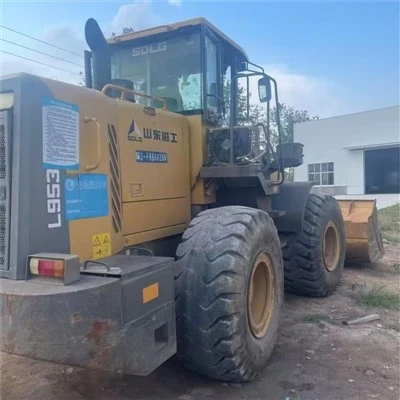
Used Wheel Loaders are machines that have previously operated in construction, mining, agricultural, industrial, or other working environments. They may be sold by equipment dealers, rental companies, contractors, or previous fleet owners.
The main attraction is their lower purchase price compared with equivalent new models. This can help businesses acquire equipment while reducing the amount of initial capital required.
Used Wheel Loaders may be particularly attractive to contractors handling short-term projects, companies expanding their fleets on limited budgets, or businesses operating in markets where pre-owned equipment is widely available.
Nevertheless, the condition of used equipment varies considerably. Two machines with similar operating hours may have very different mechanical conditions because of differences in maintenance practices, working environments, operator behavior, and previous workloads.
When evaluating used Wheel Loaders, buyers should pay attention to:
- Total operating hours and the reliability of hour-meter records.
- Previous working environments and applications.
- Engine, transmission, and hydraulic system condition.
- Maintenance and repair history.
- Signs of structural damage or excessive component wear.
- Availability of replacement parts and technical support.
A used wheel loader should be evaluated according to its actual mechanical condition rather than its age or purchase price alone.
Key Differences in Equipment Configuration and Technology
New and used Wheel Loaders may differ in more than manufacturing year and operating hours. Technological development can also influence productivity, fuel consumption, operator comfort, and maintenance requirements.
Newer models may feature updated hydraulic control systems, more efficient power management, improved visibility, and enhanced operator assistance functions. Older used machines may have simpler mechanical systems, which can sometimes make certain repairs easier, but may lack newer efficiency or safety technologies.
Buyers should compare machines based on their actual specifications rather than assuming that a newer model is automatically more productive.
For example, a well-maintained used wheel loader with a suitable bucket capacity and sufficient breakout force may be more appropriate for a particular loading operation than a smaller new machine with a lower working capacity.
The key is to determine whether the machine's technical configuration matches the material type, working cycle, site conditions, and production requirements.
2. Comparing the Purchase Price and Total Cost of Ownership
Purchase price is often the first factor buyers consider when comparing new and used Wheel Loaders. However, the initial cost represents only part of the financial commitment. A more accurate investment evaluation requires examining the total cost of ownership throughout the machine's expected operating life.
Initial Investment and Capital Requirements
New Wheel Loaders generally require a higher upfront investment because the buyer is purchasing unused equipment with a full manufacturing and delivery specification.
For businesses with sufficient capital, purchasing new machinery may provide greater control over equipment selection and initial maintenance planning. However, a higher acquisition cost can also reduce available funds for other business needs, including labor, transportation, spare parts, and additional equipment.
Used Wheel Loaders usually have a lower acquisition price, allowing buyers to enter the market or expand their fleets with less initial capital.
This may be particularly beneficial for small and medium-sized contractors that need additional loading capacity but cannot justify the cost of a new machine.
When comparing quotations, buyers should consider the complete purchasing expense rather than the listed machine price alone. For international purchases, additional expenses may include:
- Inland transportation to the export port.
- Export documentation and customs-related charges.
- International freight and marine insurance.
- Import duties and local taxes.
- Inspection, registration, and commissioning expenses.
- Required attachments and replacement components.
A used wheel loader with a low purchase price may become less attractive if it requires extensive repairs or additional transportation arrangements before entering service.
Depreciation and Resale Value
Depreciation is another important financial consideration when purchasing Wheel Loaders.
New equipment generally experiences its most noticeable depreciation during the early ownership period. The rate depends on the machine brand, model, market demand, operating hours, maintenance history, and overall condition.
Used equipment has already undergone part of its initial depreciation. This can reduce the financial impact of resale in some situations, particularly when buyers select a machine with a good maintenance record and strong demand in the second-hand market.
However, resale value should not be evaluated based on age alone. Buyers should consider:
- Brand reputation and local market recognition.
- Availability of spare parts.
- Total operating hours at the time of resale.
- Service and repair records.
- Structural and mechanical condition.
- Demand for the specific machine model.
For equipment rental companies and machinery distributors, resale value can have a significant influence on the overall profitability of an equipment investment.
Maintenance, Repair, and Replacement Costs
Maintenance expenses can create a substantial difference between new and used Wheel Loaders.
New machines generally begin their service life with components in unused condition. During the early operating period, maintenance usually follows the manufacturer's recommended service schedule, although normal wear, operating conditions, and unexpected failures can still result in additional expenses.
Used machines may require more frequent maintenance depending on their operating history. Components such as tires, hydraulic hoses, pumps, transmission parts, brakes, and engine accessories may be closer to the end of their service life.
Before purchasing used Wheel Loaders, buyers should estimate potential repair and replacement expenses based on inspection results.
A professional inspection can help identify components that may require attention soon after delivery. This allows buyers to include expected maintenance expenses in their purchasing budget instead of treating them as unexpected costs.
Calculating the Total Cost of Ownership
Total cost of ownership provides a more comprehensive way to compare new and used Wheel Loaders.
It includes the purchase price, transportation expenses, fuel consumption, maintenance, repairs, insurance, financing, downtime, and eventual resale value.
A simplified evaluation can be expressed as:
TCO = P + L + F + M + R + D - V
Where:
- P = Purchase price.
- L = Transportation and logistics expenses.
- F = Fuel and operating expenses.
- M = Routine maintenance costs.
- R = Repair and component replacement costs.
- D = Financing and downtime-related expenses.
- V = Estimated resale value.
Buyers should compare these costs over the same expected ownership period and operating hours.
For example, a new wheel loader may have a higher purchase price but lower repair uncertainty during its initial service period. A used machine may require less capital initially but could generate higher maintenance expenses.
The better investment is the option that delivers the required productivity at a more suitable total cost, not necessarily the one with the lowest purchase price.
3. Evaluating Performance, Reliability, and Maintenance Requirements
The operational condition of a wheel loader directly affects its ability to maintain productivity. Whether purchasing new or used equipment, buyers should examine performance specifications, mechanical reliability, and maintenance requirements before making a decision.
Engine Performance and Fuel Efficiency
The engine provides the power required for loading, lifting, traveling, and operating auxiliary systems. Engine performance is particularly important when Wheel Loaders work with dense materials or operate for extended periods.
New models may incorporate updated engine technologies and power management systems designed to improve fuel efficiency and meet applicable emission requirements.
Used machines may have different fuel consumption characteristics depending on engine condition, maintenance history, model generation, and operating practices.
When comparing engine performance, buyers should evaluate:
- Rated engine power and torque.
- Engine displacement and configuration.
- Fuel consumption under comparable operating conditions.
- Cooling system condition.
- Exhaust and emission control equipment.
- Availability of engine components and technical support.
Fuel consumption should be considered in relation to actual material-handling productivity. A machine that consumes slightly more fuel may still offer better operating economics if it handles more material per working hour.
For businesses operating Wheel Loaders for several shifts per day, even relatively small differences in fuel consumption can accumulate into significant annual expenses.
Hydraulic System and Loading Performance
The hydraulic system controls important wheel loader functions, including boom lifting, bucket tilting, steering, and auxiliary attachment operation.
Hydraulic pump performance, system pressure, cylinder condition, and control valve response all influence the machine's working efficiency.
New Wheel Loaders provide factory-standard hydraulic components and documented system specifications. Used machines require more careful inspection because internal wear, oil contamination, leakage, and previous repairs may affect hydraulic performance.
Buyers should examine the following areas:
- Hydraulic pump noise and operating condition.
- Cylinder movement and response speed.
- Hydraulic hose and connection condition.
- Signs of oil leakage around pumps, valves, and cylinders.
- Steering system responsiveness.
- Compatibility with the required attachments.
For used equipment, hydraulic oil condition and available service records can provide additional information about maintenance practices.
A properly functioning hydraulic system helps maintain smooth loading cycles and reduces the likelihood of unexpected downtime.
Transmission, Axles, and Drivetrain Condition
Wheel Loaders frequently operate under changing loads and travel conditions. Their transmission and drivetrain systems must support repeated acceleration, reversing, steering, and material handling.
Transmission type and configuration can vary between models. Buyers should compare the specifications according to their intended operating conditions.
For new machines, the manufacturer should provide technical documentation covering the transmission, axles, and drivetrain maintenance requirements.
For used Wheel Loaders, inspection should focus on shifting behavior, unusual noise, vibration, oil leakage, and signs of excessive wear.
Particular attention should be given to:
- Transmission response during forward and reverse operation.
- Gear shifting smoothness.
- Axle and differential condition.
- Drive shaft and joint condition.
- Brake performance.
- Tire wear and wheel alignment.
A problem in the drivetrain can affect both machine productivity and repair costs. For this reason, buyers should include transmission and axle inspections in any pre-purchase assessment of used equipment.
Maintenance Accessibility and Spare Parts Availability
Maintenance requirements are influenced by machine design, component selection, operating environment, and the availability of qualified technicians.
New Wheel Loaders may provide easier access to current manufacturer documentation, service procedures, and original replacement parts. However, buyers should still confirm the manufacturer's service network in their operating region.
Used Wheel Loaders may have the advantage of using established components that local technicians already understand. On the other hand, older models may face parts shortages, discontinued components, or longer repair lead times.
For international buyers, spare parts availability is particularly important because equipment downtime may be prolonged if components must be imported.
Before purchasing, ask the supplier about:
- Recommended maintenance intervals.
- Common replacement parts and consumables.
- Local or regional spare parts availability.
- Technical documentation and maintenance manuals.
- Warranty coverage and repair responsibilities.
- Remote technical support arrangements.
A machine with accessible spare parts and manageable maintenance requirements can provide more predictable operating conditions over time.
4. Choosing Between New and Used Wheel Loaders for Different Business Applications
The better investment depends heavily on how the equipment will be used. Different industries have different requirements for operating hours, loading capacity, reliability, mobility, and project duration.
Construction Contractors: Balancing Budget and Project Requirements
Construction contractors often need Wheel Loaders for loading sand, gravel, crushed stone, soil, and construction waste. Equipment may be used across several projects with changing site conditions.
For contractors handling long-term projects or operating equipment daily, new Wheel Loaders may be a suitable choice because they offer a known initial condition and access to manufacturer warranty arrangements.
For companies handling short-term contracts or occasional loading tasks, used Wheel Loaders may provide a more economical solution if the machine passes a thorough inspection.
Buyers should consider project duration, daily working hours, bucket capacity, operating weight, and the expected transportation frequency.
A machine that is too small may reduce loading efficiency, while an unnecessarily large wheel loader can increase fuel consumption and transportation expenses.
Mining and Quarrying: Prioritizing Reliability and Heavy-Duty Performance
Mining and quarrying operations often place demanding requirements on Wheel Loaders. Machines may operate for long hours while handling heavy materials such as ore, rocks, gravel, and crushed aggregates.
In these environments, equipment reliability and downtime management are particularly important.
New Wheel Loaders may be attractive for businesses planning long-term operations because buyers can select heavy-duty configurations and establish maintenance schedules from the beginning.
Used machines may still be suitable for certain quarrying and mining tasks, but their structural condition, drivetrain, hydraulic system, and tire condition should be examined carefully.
Buyers should also consider bucket capacity, breakout force, tire specifications, cooling performance, and compatibility with the site's loading and hauling equipment.
The selected wheel loader should be able to maintain efficient loading cycles without exceeding the machine's rated operating capabilities.
Agriculture and Material Handling: Considering Working Frequency
Wheel Loaders are widely used in agricultural facilities, grain storage areas, feed production sites, warehouses, and industrial material-handling operations.
Typical tasks include loading bulk materials, moving feed, handling soil, cleaning work areas, and transporting materials over short distances.
For businesses with moderate working hours and relatively predictable workloads, a well-maintained used wheel loader may offer sufficient performance at a lower acquisition cost.
However, new equipment may be more appropriate when the machine must operate frequently or when specific requirements involve modern operator controls, emission compliance, or specialized attachments.
Buyers should pay attention to bucket design, tire selection, maneuverability, lifting capacity, and the machine's ability to operate on the site's ground surface.
Equipment Rental Companies and Machinery Distributors
Equipment rental businesses and machinery distributors evaluate Wheel Loaders from a different investment perspective. Their main concerns include utilization rate, customer demand, maintenance costs, resale value, and fleet flexibility.
New machines may appeal to rental customers who require newer equipment with documented service histories and manufacturer support.
Used Wheel Loaders can help rental companies expand their fleets with lower initial capital requirements, particularly when purchasing models with strong demand in the local market.
Distributors should also consider brand recognition, spare parts availability, technical support, and the ease of reselling equipment.
A mixed fleet containing both new and used Wheel Loaders may provide flexibility for serving customers with different budgets and project requirements.
5. How to Inspect and Purchase New or Used Wheel Loaders
After deciding which type of equipment is more suitable, buyers should evaluate the supplier and verify the machine's specifications and condition. A structured purchasing process can reduce technical misunderstandings and help prevent unexpected expenses after delivery.
What to Check Before Buying New Wheel Loaders
When purchasing new Wheel Loaders, buyers should verify that the machine's configuration matches the agreed technical requirements.
The product quotation and technical documentation should clearly identify the model, engine specifications, operating weight, bucket capacity, hydraulic system, transmission, tire configuration, and optional equipment.
Buyers should also request information about the manufacturer's quality control procedures and final inspection arrangements.
Important purchasing considerations include:
- Confirmation of the exact model and configuration.
- Engine and emission compliance documentation.
- Component brands and technical specifications.
- Factory inspection and testing procedures.
- Warranty coverage and maintenance requirements.
- Production lead time and delivery schedule.
- Export documentation and shipping arrangements.
For customized machines, buyers should approve the final technical configuration before production begins.
How to Inspect Used Wheel Loaders Before Purchase
A detailed inspection is essential when purchasing used Wheel Loaders. Buyers should not rely entirely on photographs, seller descriptions, or the stated operating hours.
A physical inspection by qualified technicians is preferable, especially when the machine will be purchased from another country.
The inspection should cover the engine, hydraulic system, transmission, axles, tires, frame, bucket, and operator cabin.
Buyers should also request maintenance records and information about previous repairs. If available, operating history and inspection reports can help establish whether the machine has been maintained according to recommended procedures.
A used wheel loader inspection should include:
- Checking for engine leaks, unusual noise, smoke, and overheating.
- Examining hydraulic cylinders, hoses, pumps, and valves.
- Testing forward and reverse transmission functions.
- Inspecting axles, differentials, brakes, and drivetrain components.
- Checking tire condition, tread wear, and sidewall damage.
- Examining the frame, articulation joints, and bucket structure for cracks or deformation.
- Testing steering, lighting, instruments, and cabin controls.
- Confirming the operating hours and available service records.
A machine that appears clean externally may still have significant mechanical wear. Buyers should therefore prioritize functional testing and inspection evidence over cosmetic appearance.
Evaluating Manufacturer and Used Equipment Supplier Credibility
Supplier reliability is important for both new and used equipment purchases.
For new Wheel Loaders, buyers should evaluate the manufacturer's production experience, engineering capabilities, quality management, export experience, and after-sales support.
For used Wheel Loaders, the supplier should be able to provide accurate machine descriptions, operating history, inspection information, and clear ownership or sales documentation.
International buyers should also check whether the supplier has experience handling export procedures and can provide the required commercial and shipping documents.
Before confirming an order, buyers may request:
- Company registration and business information.
- Factory or equipment yard photographs and videos.
- Product specifications and inspection records.
- Customer references or previous export cases.
- Warranty and after-sales service terms.
- Spare parts supply arrangements.
Clear communication and complete documentation can help reduce purchasing risks, particularly when buyers cannot inspect equipment in person.
Confirming Payment, Warranty, Shipping, and Delivery Terms
The final purchasing stage involves confirming the commercial and logistics arrangements.
For new Wheel Loaders, the contract should specify the production schedule, machine configuration, inspection requirements, warranty conditions, and delivery terms.
For used machines, the contract should clearly state the machine's condition, operating hours, included attachments, known defects, and any repairs agreed upon before shipment.
International buyers should also confirm the following arrangements:
- Payment terms and payment milestones.
- Pre-shipment inspection requirements.
- Export documents and customs clearance responsibilities.
- Shipping method and freight arrangements.
- Insurance coverage and risk allocation.
- Estimated delivery time.
- Spare parts and technical support after arrival.
A clearly defined purchase agreement helps ensure that the delivered wheel loader matches the buyer's expectations and reduces the risk of disputes.
Conclusion: Which Wheel Loader Is the Better Investment for Your Business?
Choosing between new and used Wheel Loaders requires more than comparing purchase prices. Buyers should evaluate the complete investment, including equipment condition, working performance, maintenance requirements, expected service life, operating costs, and resale value.
New Wheel Loaders are generally more suitable for businesses that require long-term equipment deployment, updated technologies, predictable initial machine condition, and manufacturer warranty support. They also provide greater flexibility when selecting configurations for specific operating requirements.
Used Wheel Loaders can be a practical investment for businesses with limited capital, shorter project cycles, or moderate equipment utilization. However, their value depends heavily on actual mechanical condition, maintenance history, component wear, and spare parts availability.
For construction contractors, mining operators, rental companies, and international machinery buyers, the right choice is the machine that meets operational requirements while maintaining a manageable total cost of ownership.
Before making a final decision, compare complete technical specifications, arrange appropriate inspections, evaluate supplier credibility, and confirm warranty and delivery arrangements.
Ultimately, both new and used Wheel Loaders can deliver business value when selected according to project requirements and supported by proper maintenance. A well-informed purchasing decision helps businesses control equipment investment, maintain loading efficiency, and improve long-term operational performance.